
In mining and construction industries, mastering stone crusher specifications is crucial for operational efficiency. This guide explores technical details—crusher types, performance parameters, selection strategies—with SBM China model comparisons, maintenance tips, and critical factor analysis. Whether you’re processing granite or limestone, precise specifications ensure maximum ROI and minimal downtime.
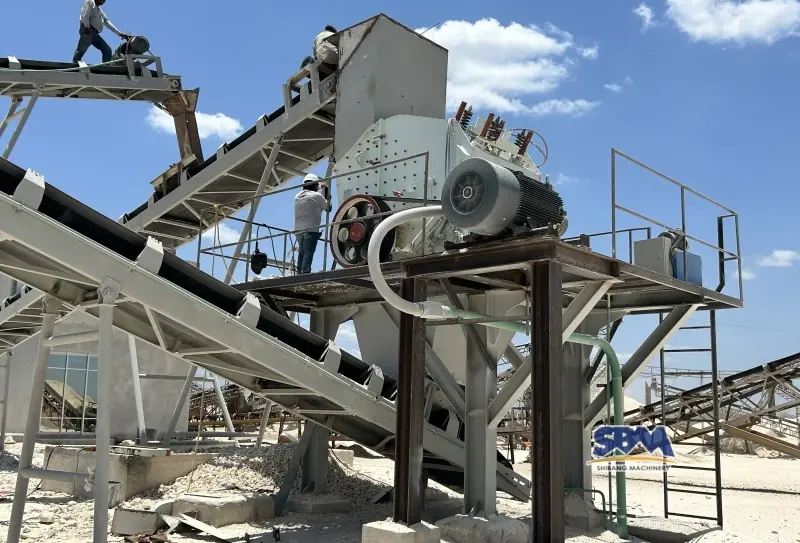
Understanding Stone Crushers and Their Function
Stone crushers break large rocks into construction aggregates (gravel, sand). Essential for infrastructure projects, they transform raw materials like basalt or andesite into usable sizes. Correct technical specifications directly impact productivity and cost-efficiency.
Why Specifications Matter: Avoid Costly Mistakes
Incorrect specs lead to catastrophic costs:
-
Undersized capacity → Production bottlenecks
-
Mismatched output size → Unmarketable products
-
Weak motor power → Overheating on hard rocks
Accurate crusher specifications prevent operational failures and boost profitability.
Crusher Types by Specifications
Each crusher type serves unique purposes:
Jaw Crusher Specifications (Primary Crushing)
Ideal for hard rocks (granite/basalt). Uses compressive force.
Table: SBM Jaw Crusher Specs (PE Series)
| Model | Feed Opening (mm) | Max Input Size (mm) | Capacity (t/h) | Motor Power (kW) |
|---|---|---|---|---|
| PE-600×900 | 600x900 | 500 | 50-180 | 55-75 |
| PE-750×1060 | 750x1060 | 630 | 110-320 | 110-132 |
| PE-900×1200 | 900x1200 | 750 | 220-380 | 132-160 |
Note: Capacity varies with rock hardness and moisture.
Impact Crusher Specifications (Secondary Crushing)
Produces cubical aggregates via impact force. Best for limestone/sedimentary rocks.
Table: SBM Impact Crusher Specs (PF Series)
| Model | Rotor Size (mm) | Input Size (mm) | Capacity (t/h) | Motor (kW) |
|---|---|---|---|---|
| PF-1007 | Φ1000x700 | 300 | 30-70 | 37-45 |
| PF-1214 | Φ1250x1400 | 400 | 80-180 | 132-160 |
Cone Crusher Specifications (Tertiary Crushing)
Delivers fine output (0-5mm). Uses gyrating compression.
Table: SBM Cone Crusher Specs (HPT Series)
| Model | Output Size (mm) | Capacity (t/h) | Motor (kW) |
|---|---|---|---|
| HPT-200 | 16-38 | 90-350 | 160 |
| HPT-300 | 19-51 | 150-610 | 250 |
4 Key Factors for Choosing Crusher Specs
-
Material Hardness
-
Granite/basalt → Prioritize jaw crushers (≥132 kW)
-
Limestone → Opt for impact crushers
-
-
Required Capacity
Small sites (<100 t/day): PE-600×900. Large quarries: HPT-300 -
Output Size Needs
0-5mm aggregates? Cone crushers are mandatory -
Operating Environment
Dusty/wet sites? Choose sealed bearings and dust suppression systems
Practical Selection Tips
From industry experience:
-
Audit Needs: Calculate daily volume, input size, and desired output
-
Compare Technical Data: Use tables above. Need 200 t/h? Consider PE-900×1200
-
Test Your Material: Bring samples to suppliers for crushing trials
-
Verify After-Sales Support: Ensure spare parts availability
I once chose the wrong crusher—our project stalled for 2 weeks! Always request demos now.
Maintenance: Keep Specs Performing Optimally
Prevent failures with:
-
Daily: Check bearing lubrication and bolt tightness
-
Weekly: Clear jammed material from crushing chambers
-
Monthly: Replace wear parts (jaws, hammers) with genuine SBM parts
-
Annually: Schedule certified technician calibration
*$200/month maintenance prevents $2,000 repairs!*
Conclusion: Precision Specs = Peak Performance
Selecting stone crusher specifications isn’t about data sheets—it’s matching equipment to your project’s DNA. Follow this guide, consult SBM China experts, and test rigorously. With precise technical parameters, your investment will deliver lasting returns. Crush smart!
Author’s Insight: "Field data shows 70% of crusher failures stem from mismatched specs. Don’t chase cheap prices—prioritize technical fit!"

 English
 Arabic
 French
 Spanish
 Portuguese
 Deutsch
 Turkish
 Italiano
 Russian
 Romaian
 Portuguese (Brazil)
 Greek
Greek
Warning: Undefined array key "_is_photo" in /home/senmarri/public_html/friend24.in/content/themes/default/templates_compiled/9ea4999d05077b6b690d81624544cd64a51b1299_0.file.__feeds_post.comments.tpl.php on line 27
Warning: Attempt to read property "value" on null in /home/senmarri/public_html/friend24.in/content/themes/default/templates_compiled/9ea4999d05077b6b690d81624544cd64a51b1299_0.file.__feeds_post.comments.tpl.php on line 27
" style="background-image:url(
Warning: Undefined array key "user_picture" in /home/senmarri/public_html/friend24.in/content/themes/default/templates_compiled/19bd7b5d2fc32801d9316dbc2d8c5b25c99e72c3_0.file.__feeds_comment.form.tpl.php on line 31
);">
/home/senmarri/public_html/friend24.in/content/themes/default/templates_compiled/9ea4999d05077b6b690d81624544cd64a51b1299_0.file.__feeds_post.comments.tpl.php on line 128
Warning: Attempt to read property "value" on null in /home/senmarri/public_html/friend24.in/content/themes/default/templates_compiled/9ea4999d05077b6b690d81624544cd64a51b1299_0.file.__feeds_post.comments.tpl.php on line 128
">