
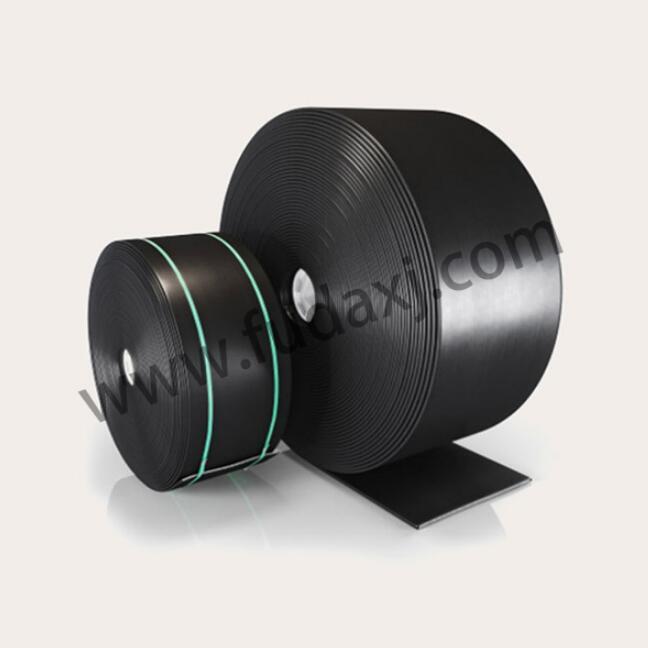
The operational demands of large-scale industries are heavily reliant on the consistent performance of the conveyor belt, a system designed for the continuous transport of materials over both short and long distances. This technology functions by forming a closed loop that travels over a defined path, powered by a drive mechanism that provides the necessary traction. The scale of a conveyor belt installation can vary dramatically, from a few meters in a small workshop to several kilometers in a mining operation. The engineering of a conveyor belt system requires careful calculation of loads, speeds, and power requirements to ensure reliable and efficient operation. The durability and reliability of the conveyor belt are paramount, as unplanned downtime can disrupt entire production chains and result in significant financial loss. The sustained functionality of the conveyor belt is therefore a key concern for engineers and facility managers.
The long-term performance and cost-effectiveness of a conveyor belt are directly linked to a proactive and systematic maintenance regimen. Regular inspection of the conveyor belt is essential to identify early signs of wear, such as edge fraying, cover abrasion, or damage to the carcass. The mechanical components supporting the conveyor belt, including idlers, bearings, and pulleys, must be checked for proper alignment and lubrication to prevent excessive wear on the belt itself. Tracking is a common issue where the conveyor belt drifts to one side; this must be corrected promptly to avoid damage to the belt edges and the supporting structure. Cleaning is another important aspect of conveyor belt maintenance, as material buildup on pulleys and idlers can cause uneven wear and tracking problems. For complex systems, maintenance schedules are often documented and tracked using computerized systems to ensure that inspections, lubrication, and component replacements are performed in a timely manner. A well-maintained conveyor belt can achieve a long service life, providing a strong return on investment.
The design and implementation of a conveyor belt system also involve significant considerations for safety and operational control. Emergency stop switches, pull cords, and belt misalignment sensors are standard safety features integrated into a conveyor belt system to protect workers and equipment. Guards are installed around moving parts like drive pulleys and tail sections to prevent contact. The control system for a conveyor belt can range from a simple start-stop station to a sophisticated programmable logic controller (PLC) that manages the speed, sequencing, and interaction with other machinery. In complex networks, a single control system might manage multiple conveyor belt sections, coordinating their operation to smoothly transfer products from one belt to another. The integration of the conveyor belt into the broader automated control system allows for real-time monitoring of performance metrics, enabling predictive maintenance and rapid response to any operational anomalies. This level of integration ensures that the conveyor belt functions not as an isolated component, but as a cohesive part of the entire production ecosystem.
The conveyor belt exemplifies a mature yet continuously improving technology that is vital to the efficiency of modern industry. Its design incorporates principles of mechanical engineering, materials science, and systems control to create a reliable method of transport. The focus on robust maintenance and safety protocols ensures that the conveyor belt operates effectively over its full lifecycle. As a critical link in the chain of production and distribution, the conveyor belt's role in enabling scalable, efficient, and safe material handling is firmly established and will continue to be essential for future industrial advancements.

 English
 Arabic
 French
 Portuguese
 Deutsch
 Turkish
 Dutch
Dutch
 Italiano
 Russian
 Romaian
 Portuguese (Brazil)
 Greek
Greek
Warning: Undefined array key "_is_photo" in /home/senmarri/public_html/friend24.in/content/themes/default/templates_compiled/9ea4999d05077b6b690d81624544cd64a51b1299_0.file.__feeds_post.comments.tpl.php on line 27
Warning: Attempt to read property "value" on null in /home/senmarri/public_html/friend24.in/content/themes/default/templates_compiled/9ea4999d05077b6b690d81624544cd64a51b1299_0.file.__feeds_post.comments.tpl.php on line 27
" style="background-image:url(
Warning: Undefined array key "user_picture" in /home/senmarri/public_html/friend24.in/content/themes/default/templates_compiled/19bd7b5d2fc32801d9316dbc2d8c5b25c99e72c3_0.file.__feeds_comment.form.tpl.php on line 31
);">
/home/senmarri/public_html/friend24.in/content/themes/default/templates_compiled/9ea4999d05077b6b690d81624544cd64a51b1299_0.file.__feeds_post.comments.tpl.php on line 128
Warning: Attempt to read property "value" on null in /home/senmarri/public_html/friend24.in/content/themes/default/templates_compiled/9ea4999d05077b6b690d81624544cd64a51b1299_0.file.__feeds_post.comments.tpl.php on line 128
">