
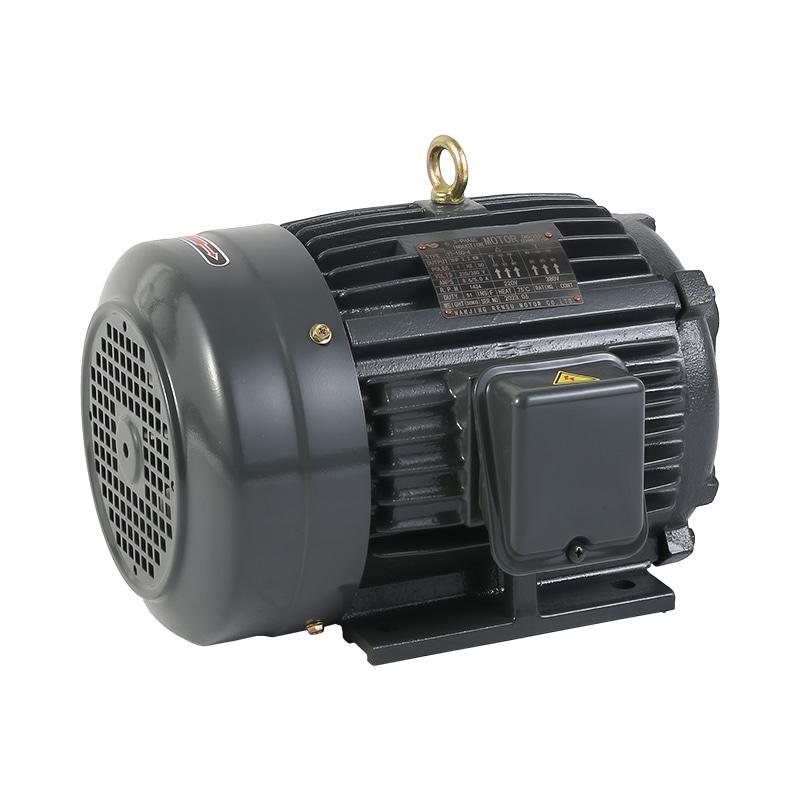
The three phase motor stands as a fundamental component within global industrial infrastructure, providing the rotational force required for countless applications. This type of electric motor is characterized by its use of a three-phase alternating current power supply, which creates a rotating magnetic field to drive its operation. The design of a three phase motor is valued for its inherent balance and self-starting capability, which contributes to smooth operation under substantial loads. You will find this motor type in settings ranging from manufacturing plants and water treatment facilities to commercial heating and cooling systems. The widespread adoption of the three phase motor is largely due to its efficient power conversion and robust construction, which supports continuous operation in demanding environments. The dependable nature of this motor makes it a preferred choice for applications where consistent performance is required.
The operational principle of a three phase motor is based on the generation of a rotating magnetic field. When electrical power is applied to the stator windings, the three-phase current produces a magnetic flux that rotates at a synchronous speed. This rotating field induces currents in the rotor, which then create its own magnetic field. The interaction between the stator's rotating field and the rotor's induced field produces torque, causing the rotor to turn. This design eliminates the need for electrical connections to the rotor, contributing to the mechanical simplicity and durability of a three phase motor. The synchronous speed of a three phase motor is determined by the frequency of the power supply and the number of magnetic poles in its construction. This relationship provides a predictable operating speed that is difficult to achieve with single-phase alternatives, making the three phase motor suitable for applications requiring precise speed maintenance.
The construction of a three phase motor focuses on durability and effective thermal management. The external frame, typically made of cast iron or aluminum, houses the laminated steel stator core and windings. This robust enclosure protects internal components from environmental contaminants and mechanical damage. The rotor, often of a squirrel-cage design, consists of copper or aluminum bars short-circuited by end rings, creating a sturdy assembly capable of withstanding high starting currents and operational stresses. Effective heat dissipation is critical for a three phase motor, as excessive temperatures can degrade insulation and shorten its service life. Cooling is commonly achieved through an externally mounted fan that forces air across the motor's frame. For a three phase motor operating in challenging conditions, additional cooling methods or enclosed designs may be implemented to maintain safe operating temperatures and ensure reliable performance over an extended period.
The three phase motor remains an indispensable asset in industrial and commercial settings, demonstrating a successful application of electromagnetic principles. Its robust construction and efficient operation ensure its continued relevance in powering machinery and systems that form the backbone of modern industry. The predictable performance and manageable maintenance requirements of a three phase motor contribute to its longstanding presence in engineering applications. As industrial technology advances, the fundamental design and operational principles of the three phase motor continue to provide a reliable solution for converting electrical energy into mechanical power.

 English
 Arabic
 French
 Spanish
 Portuguese
 Deutsch
 Turkish
 Dutch
Dutch
 Italiano
 Romaian
 Portuguese (Brazil)
 Greek
Greek
Warning: Undefined array key "_is_photo" in /home/senmarri/public_html/friend24.in/content/themes/default/templates_compiled/9ea4999d05077b6b690d81624544cd64a51b1299_0.file.__feeds_post.comments.tpl.php on line 27
Warning: Attempt to read property "value" on null in /home/senmarri/public_html/friend24.in/content/themes/default/templates_compiled/9ea4999d05077b6b690d81624544cd64a51b1299_0.file.__feeds_post.comments.tpl.php on line 27
" style="background-image:url(
Warning: Undefined array key "user_picture" in /home/senmarri/public_html/friend24.in/content/themes/default/templates_compiled/19bd7b5d2fc32801d9316dbc2d8c5b25c99e72c3_0.file.__feeds_comment.form.tpl.php on line 31
);">
/home/senmarri/public_html/friend24.in/content/themes/default/templates_compiled/9ea4999d05077b6b690d81624544cd64a51b1299_0.file.__feeds_post.comments.tpl.php on line 128
Warning: Attempt to read property "value" on null in /home/senmarri/public_html/friend24.in/content/themes/default/templates_compiled/9ea4999d05077b6b690d81624544cd64a51b1299_0.file.__feeds_post.comments.tpl.php on line 128
">