
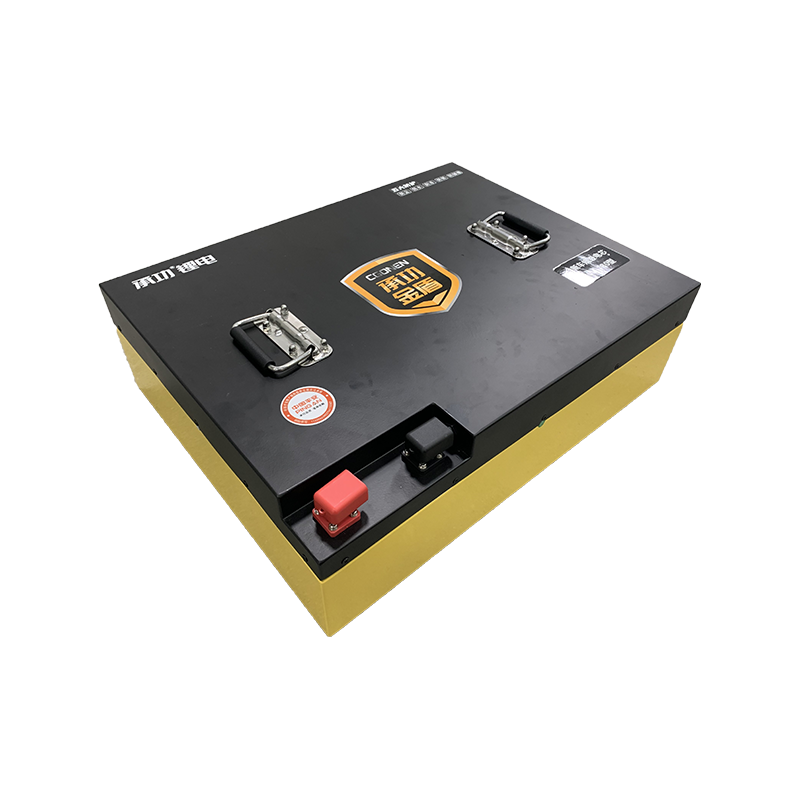
To maintain the health of a lithium ion battery, proper charging practices are recommended. While modern devices with a built-in BMS manage the process, avoiding consistently draining the battery to zero percent or charging it to 100 percent for extended periods can help preserve its capacity. A partial charge cycle, such as keeping a lithium ion battery between 20% and 80%, is often suggested for optimal long-term health. Using the correct charger designed for the specific lithium ion battery is also crucial, as incompatible chargers can cause damage and pose safety risks.
Temperature is a significant factor affecting a lithium ion battery. High temperatures can accelerate chemical degradation within the cells, leading to a permanent loss of capacity. Conversely, operating a lithium ion battery in very cold conditions can temporarily reduce its ability to deliver power and can also cause physical stress to the components. It is advisable to store and use devices with a lithium ion battery in moderate temperature environments. Avoiding leaving a device like a smartphone or laptop in a hot car is a simple but effective practice for preserving battery life.
Safety mechanisms are integral to the design of a lithium ion battery. The separator membrane between the electrodes is designed to shut down ion flow if the battery becomes too hot, providing a fail-safe. However, physical damage from punctures or crushing can compromise the internal structure of a lithium ion battery, leading to a short circuit. This can cause thermal runaway, a condition where the battery heats up rapidly and may potentially catch fire. Therefore, it is important to protect a lithium ion battery from sharp impacts and to discontinue use if the casing becomes swollen or damaged.
Recycling is an important consideration at the end of a lithium ion battery's life. These batteries contain valuable materials like cobalt, nickel, and lithium that can be recovered and reused in new batteries. Proper disposal through designated recycling channels helps prevent environmental contamination and conserves natural resources. As the use of lithium ion battery technology grows, the development of efficient and scalable recycling processes becomes increasingly important for creating a sustainable lifecycle for this important energy storage technology.

 English
 Arabic
 French
 Spanish
 Portuguese
 Turkish
 Dutch
Dutch
 Italiano
 Russian
 Romaian
 Portuguese (Brazil)
 Greek
Greek
Warning: Undefined array key "_is_photo" in /home/senmarri/public_html/friend24.in/content/themes/default/templates_compiled/9ea4999d05077b6b690d81624544cd64a51b1299_0.file.__feeds_post.comments.tpl.php on line 27
Warning: Attempt to read property "value" on null in /home/senmarri/public_html/friend24.in/content/themes/default/templates_compiled/9ea4999d05077b6b690d81624544cd64a51b1299_0.file.__feeds_post.comments.tpl.php on line 27
" style="background-image:url(
Warning: Undefined array key "user_picture" in /home/senmarri/public_html/friend24.in/content/themes/default/templates_compiled/19bd7b5d2fc32801d9316dbc2d8c5b25c99e72c3_0.file.__feeds_comment.form.tpl.php on line 31
);">
/home/senmarri/public_html/friend24.in/content/themes/default/templates_compiled/9ea4999d05077b6b690d81624544cd64a51b1299_0.file.__feeds_post.comments.tpl.php on line 128
Warning: Attempt to read property "value" on null in /home/senmarri/public_html/friend24.in/content/themes/default/templates_compiled/9ea4999d05077b6b690d81624544cd64a51b1299_0.file.__feeds_post.comments.tpl.php on line 128
">