
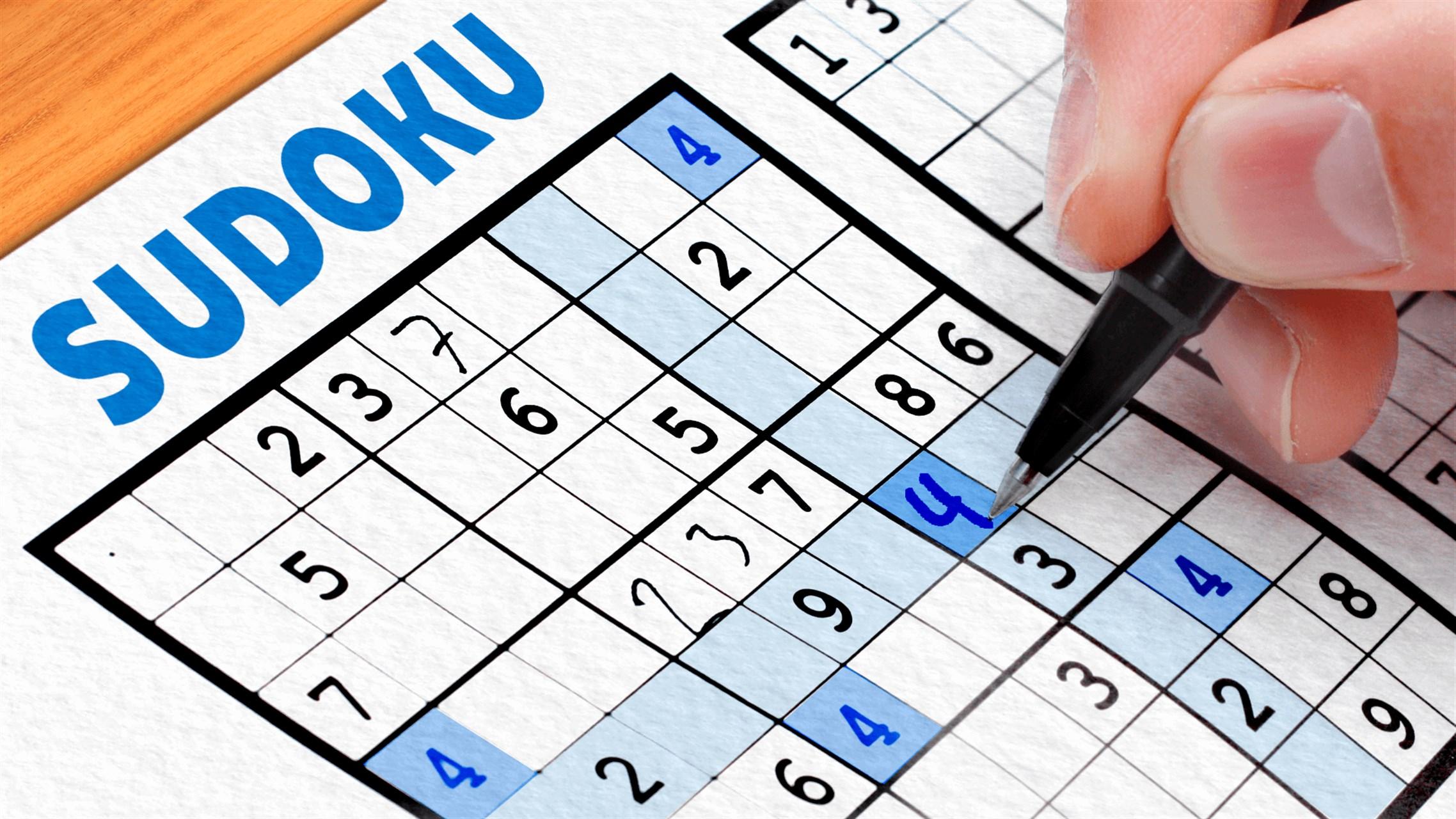
I’ve played a lot of games in my life. Some were quick distractions that faded after a few weeks, others stayed with me for years. But there’s one game that I keep coming back to whenever I need a challenge, a mental break, or even just a quiet companion for my morning coffee: Sudoku.
It’s funny when I think about it. On paper, Sudoku sounds almost boring—just numbers in a grid, right? No flashy animations, no rewards, no soundtracks. And yet, every time I open a new puzzle, I feel a little spark of excitement. What’s going to happen this time? Will it be one of those magical runs where everything falls into place quickly, or will it turn into a slow, frustrating crawl where I question my entire logical ability?
Spoiler: it’s often both.
My First Encounter With Sudoku
I still remember my first Sudoku puzzle. It was in a newspaper—yes, the old-fashioned printed kind—back when I was in high school. The rules seemed simple enough: fill the grid so that each row, column, and 3x3 box contained numbers from 1 to 9 without repetition.
“Easy,” I thought.
Except it wasn’t.
I confidently filled in a few numbers, then suddenly realized I’d trapped myself. No matter what I did, I ended up with duplicates in the same row. That was my first humbling lesson: Sudoku is not a guessing game. You need logic, patience, and a sharp eye for detail.
But instead of putting it down, I got hooked. There was something so satisfying about staring at the grid, spotting a hidden pattern, and placing that one missing number that unlocked the whole puzzle. It was like solving a riddle designed just for me.
The Rollercoaster of Emotions
If you’ve ever played Sudoku, you know it’s not just about numbers. It’s about emotions.
-
The thrill of finding a “hidden single” after minutes of scanning.
-
The frustration when you realize you made a mistake 20 moves ago and have to start over.
-
The weird joy when you finally place the last number and the grid looks perfectly complete, like a neatly tied bow.
One of my most memorable games happened on a long train ride. I had downloaded a set of “Evil” level puzzles on my phone. The train was rocking, people were chatting, but I was in my own bubble, completely focused. For almost an hour, I kept getting stuck on the same spot. Then, out of nowhere, I saw it: a tiny possibility in the corner of the grid that unlocked the entire puzzle. I swear, I grinned like I’d just won the lottery. The stranger sitting next to me probably thought I was a little too happy for someone just staring at numbers.
Why Sudoku Is So Addictive
I’ve thought a lot about why Sudoku keeps pulling me back. Here’s what I’ve realized:
-
It’s pure logic.
There’s no luck involved. Unlike card games where a bad hand can ruin you, Sudoku rewards patience and clear thinking. -
It’s meditative.
When I play, my brain shuts out everything else. The endless to-do lists, the buzzing phone, the stress—it all fades into the background. -
It’s endlessly challenging.
There are infinite puzzles, from “so easy you can solve them half-asleep” to “diabolical beasts” that test the limits of human patience. -
It gives instant feedback.
Every correct number feels like a little victory. It’s progress you can see right in front of you.
And honestly? It just feels good to finish something. Life doesn’t always give us clear endings, but Sudoku does.
My Little Tricks for Playing
I’m not a professional by any means, but over the years, I’ve picked up some tricks that make the game more enjoyable:
-
Pencil marks are lifesavers. Writing down possibilities in each square might feel tedious, but it prevents mistakes later.
-
Scan, don’t guess. If I ever find myself tempted to “just try a number and see what happens,” I take a break. Guessing always backfires.
-
Work in layers. Start with the easy wins, then come back for the trickier spots once the grid is less cluttered.
-
Take breaks. Sometimes the answer hides in plain sight, but your brain needs a reset to see it.
These little habits have saved me from more than a few headaches.
The Lessons Beyond the Grid
Here’s the thing: Sudoku isn’t just a puzzle—it’s also a teacher.
When I play, I notice how much it mirrors real life:
-
Patience pays off. You can’t rush through the hard parts.
-
Details matter. Missing one small clue can mess up the entire picture.
-
Sometimes you need to step away. A fresh perspective can make all the difference.
-
Every mistake is a lesson. Sure, it’s frustrating to realize you messed up, but it also teaches you what not to do next time.
I know it sounds dramatic to say a puzzle game taught me life lessons, but honestly, it has.
When Sudoku Meets Daily Life
These days, Sudoku has become part of my routine. I’ll play a quick one in the morning to wake up my brain, or at night when I need to unwind. It’s the perfect in-between game: simple enough to pick up anytime, but deep enough to keep me engaged.
And it’s versatile. I’ve played Sudoku on paper, on apps, on websites, even on the back of an airplane magazine. One time, I found myself scribbling a puzzle during a long meeting (don’t tell my boss). It’s like a portable brain gym I can take anywhere.
That Sweet Sense of Completion
There’s nothing like the moment when the last number clicks into place. It’s such a small, private victory—but it feels huge. The grid is complete, everything is neat and logical, and for a moment, the world just makes sense.
And honestly, in today’s messy, unpredictable world, having something that gives me that sense of order is priceless.
Final Thoughts
I never expected Sudoku to become such a constant part of my life, but here we are. It’s been years since I solved that first frustrating newspaper puzzle, and I’m still hooked. Whether it’s a quick five-minute game or a long battle with a fiendishly hard grid, Sudoku always gives me something: challenge, focus, or just a little moment of joy.

 English
 Arabic
 French
 Spanish
 Portuguese
 Deutsch
 Turkish
 Dutch
Dutch
 Italiano
 Russian
 Romaian
 Greek
Greek
Warning: Undefined array key "_is_photo" in /home/senmarri/public_html/friend24.in/content/themes/default/templates_compiled/9ea4999d05077b6b690d81624544cd64a51b1299_0.file.__feeds_post.comments.tpl.php on line 27
Warning: Attempt to read property "value" on null in /home/senmarri/public_html/friend24.in/content/themes/default/templates_compiled/9ea4999d05077b6b690d81624544cd64a51b1299_0.file.__feeds_post.comments.tpl.php on line 27
" style="background-image:url(
Warning: Undefined array key "user_picture" in /home/senmarri/public_html/friend24.in/content/themes/default/templates_compiled/19bd7b5d2fc32801d9316dbc2d8c5b25c99e72c3_0.file.__feeds_comment.form.tpl.php on line 31
);">
/home/senmarri/public_html/friend24.in/content/themes/default/templates_compiled/9ea4999d05077b6b690d81624544cd64a51b1299_0.file.__feeds_post.comments.tpl.php on line 128
Warning: Attempt to read property "value" on null in /home/senmarri/public_html/friend24.in/content/themes/default/templates_compiled/9ea4999d05077b6b690d81624544cd64a51b1299_0.file.__feeds_post.comments.tpl.php on line 128
">