
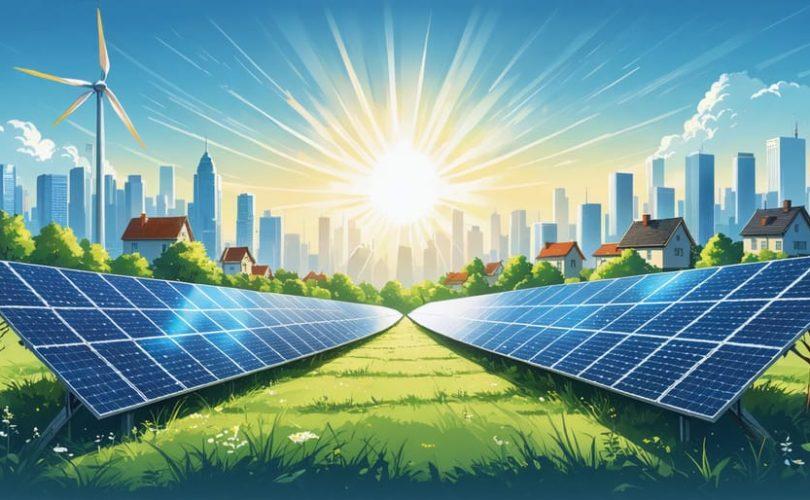
The world is moving rapidly toward renewable energy, and solar power has emerged as a major solution for both environmental sustainability and cost savings. While residential and commercial solar panel installations are common, industrial solar panels are becoming increasingly important in powering large-scale industries, factories, and manufacturing plants. These panels are specifically designed to meet high electricity demands, reduce dependency on fossil fuels, and lower operational costs.
In this article, we’ll cover everything you need to know about industrial solar panels — their features, benefits, types, applications, costs, and future trends.
What Are Industrial Solar Panels?
Industrial solar panels are large-capacity photovoltaic (PV) systems designed to generate electricity for factories, warehouses, production units, and other industrial setups. Unlike small residential solar panels, industrial solar systems are much larger in size, often installed on massive rooftops or open land (ground-mounted systems).
They convert sunlight into electricity using advanced solar cells such as:
- Mono PERC solar panels – High efficiency and long lifespan.
- Bifacial solar panels – Capture sunlight from both sides, maximizing energy output.
- TOPCon & HJT panels – Next-gen technology offering superior efficiency for industrial-scale projects.
Why Do Industries Need Solar Panels?
Industries consume a significant share of electricity. According to global energy reports, manufacturing and industrial sectors account for more than 40% of electricity demand worldwide. In countries like India, China, and the USA, industries rely heavily on coal and grid-based power, which leads to high costs and increased carbon emissions.
Installing industrial solar panels provides:
- Energy independence – Industries can generate their own power and reduce dependence on expensive grid electricity.
- Cost savings – Solar power reduces monthly electricity bills drastically.
- Sustainability – Helps industries meet green energy targets and comply with government policies.
- Long-term investment – Solar panels last 25+ years, offering a high return on investment (ROI).
Key Features of Industrial Solar Panels
- High Wattage Capacity – Industrial solar panels typically range between 400W to 600W per panel, depending on technology.
- Durability – Built to withstand tough conditions like dust, heavy rainfall, and extreme heat.
- Advanced Technology – Many manufacturers now provide bifacial and half-cut cell modules for higher efficiency.
- Scalability – Panels can be connected to create MW-scale solar power plants.
- Integration with Storage – Industrial solar systems can be paired with solar batteries to provide backup during power cuts.
Applications of Industrial Solar Panels
Industrial solar panels can be used in a wide range of industries:
- Manufacturing plants – To power heavy machinery.
- Textile industry – For running looms and production units.
- Food processing units – To operate refrigeration and packaging systems.
- Automobile industry – For assembly lines and robotic systems.
- Warehouses – To manage lighting and cooling systems.
- IT Parks & Data Centers – To power servers and cooling facilities.
- Cement and steel plants – Where energy demand is extremely high.
Industrial Solar Panel Installation Types
Industries can choose solar panel installations depending on available space:
- Rooftop Solar Systems – Solar Panels installed on large factory or warehouse rooftops.
- Ground-Mounted Solar Systems – Panels installed on open industrial land.
- Solar Carports – Parking lot structures with solar panels on top, providing dual use.
- Hybrid Solar Systems – A mix of solar + battery + grid power.
Benefits of Industrial Solar Panels
- Cost Savings: Electricity bills in industries are extremely high. By switching to solar, industries can save 30–70% on electricity costs.
- Government Subsidies & Tax Benefits: Many governments provide subsidies, accelerated depreciation benefits, and tax rebates for industries installing solar systems.
- Sustainability Goals: With global pressure on reducing carbon emissions, industries using solar panels can achieve ESG (Environmental, Social, Governance) compliance and improve brand image.
- Energy Security: Solar power ensures uninterrupted electricity supply even in areas with frequent power cuts.
- Faster ROI: Industrial solar panel projects typically recover their cost in 3–5 years, after which electricity is almost free for the next two decades.
Cost of Industrial Solar Panels
The cost of industrial solar panels depends on the technology, brand, and project size.
- In India, industrial solar panel systems typically cost between ₹35 to ₹55 per watt (as of 2025).
- For a 1 MW industrial solar plant, the cost may range from ₹3.5 to ₹5.5 crore.
- Additional costs may include inverters, batteries, mounting structures, and maintenance.
Leading Industrial Solar Panel Manufacturers in India
Some of the top solar panel companies in India that manufacture industrial-grade panels include:
- Bluebird Solar – Known for high-performance mono PERC and N-Type TOPCon modules.
- Waaree Energies – One of India’s largest solar companies.
- Vikram Solar – Specializes in advanced solar technologies.
- Tata Power Solar – A trusted name in solar EPC and manufacturing.
- Adani Solar – Offers utility and industrial-scale solar panels.
These companies provide both DCR (Domestic Content Requirement) panels for government projects and non-DCR panels for private industries.
Maintenance of Industrial Solar Panels
For maximum efficiency, industries must ensure proper solar panel maintenance:
- Regular cleaning – Dust and dirt reduce efficiency by 10–20%.
- Annual inspections – Check wiring, inverters, and connections.
- Performance monitoring – Use smart systems to track daily energy production.
- Battery maintenance – For hybrid systems, ensure timely battery checks.
Future of Industrial Solar Panels
The future of industrial solar panels looks very promising with technological advancements:
- Bifacial panels will become the standard for industries.
- Floating solar plants will be adopted in water-scarce regions.
- AI and IoT integration will allow real-time energy monitoring.
- Green hydrogen powered by solar will revolutionize heavy industries like steel and cement.
Conclusion
Industrial solar panels are no longer just an alternative — they are a necessity for industries aiming to reduce costs and embrace sustainability. With rising electricity tariffs and increasing pressure to cut carbon emissions, industries across the world are switching to solar power.
By investing in high-quality industrial solar panels, industries can enjoy long-term savings, achieve energy independence, and contribute to a greener planet. Companies like Bluebird Solar and other leading manufacturers in India are making it easier for industries to transition to clean energy by providing advanced, reliable, and cost-effective solar solutions.
In the years ahead, industrial solar panels will play a crucial role in building a sustainable, profitable, and eco-friendly industrial ecosystem.

 English
 Arabic
 French
 Portuguese
 Deutsch
 Turkish
 Dutch
Dutch
 Italiano
 Russian
 Romaian
 Portuguese (Brazil)
 Greek
Greek
Warning: Undefined array key "_is_photo" in /home/senmarri/public_html/friend24.in/content/themes/default/templates_compiled/9ea4999d05077b6b690d81624544cd64a51b1299_0.file.__feeds_post.comments.tpl.php on line 27
Warning: Attempt to read property "value" on null in /home/senmarri/public_html/friend24.in/content/themes/default/templates_compiled/9ea4999d05077b6b690d81624544cd64a51b1299_0.file.__feeds_post.comments.tpl.php on line 27
" style="background-image:url(
Warning: Undefined array key "user_picture" in /home/senmarri/public_html/friend24.in/content/themes/default/templates_compiled/19bd7b5d2fc32801d9316dbc2d8c5b25c99e72c3_0.file.__feeds_comment.form.tpl.php on line 31
);">
/home/senmarri/public_html/friend24.in/content/themes/default/templates_compiled/9ea4999d05077b6b690d81624544cd64a51b1299_0.file.__feeds_post.comments.tpl.php on line 128
Warning: Attempt to read property "value" on null in /home/senmarri/public_html/friend24.in/content/themes/default/templates_compiled/9ea4999d05077b6b690d81624544cd64a51b1299_0.file.__feeds_post.comments.tpl.php on line 128
">