
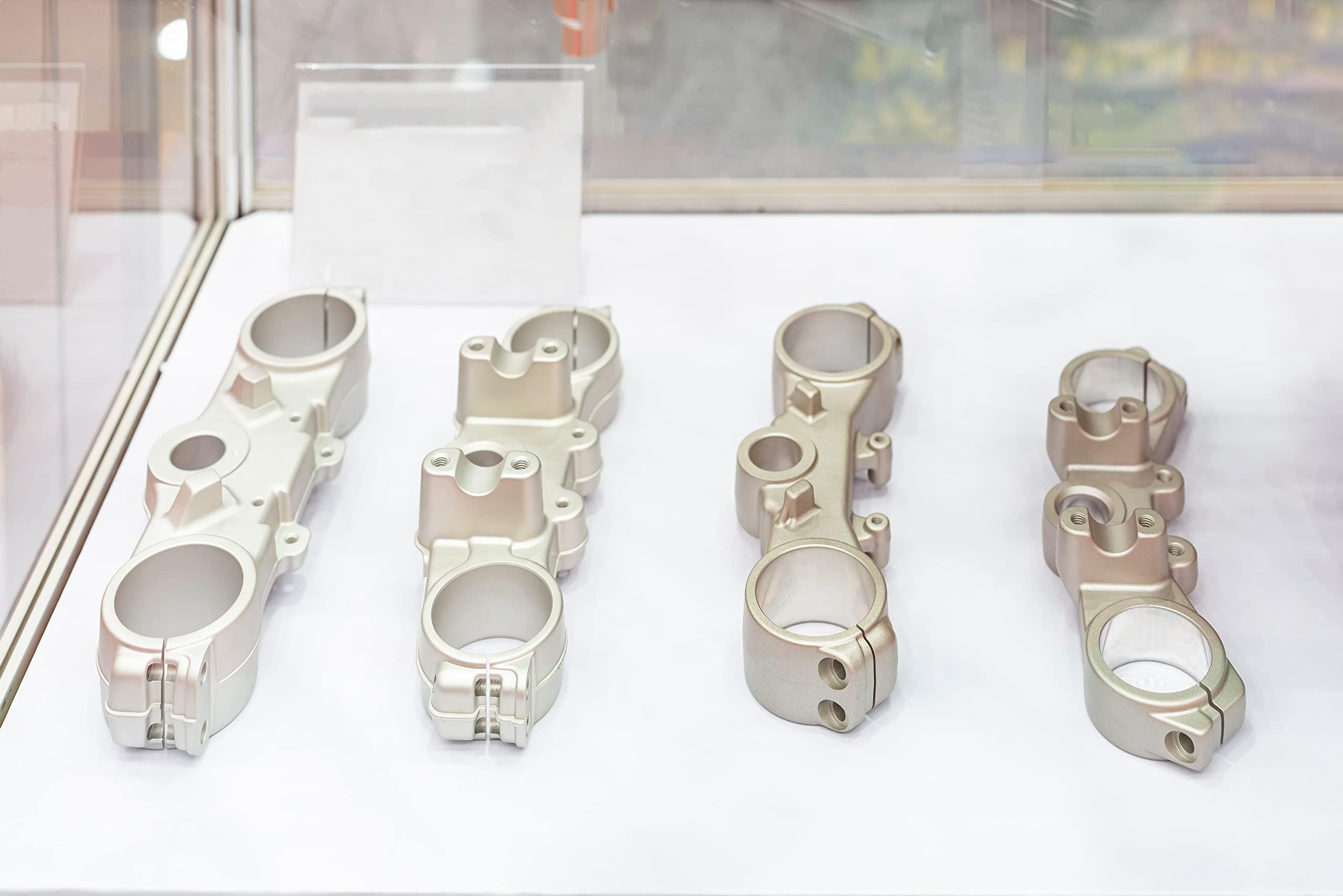
The aluminum parts gravity die casting industry plays a critical role in manufacturing precision components for automotive, aerospace, electronics, and many other sectors. This process, characterized by pouring molten aluminum into a reusable permanent mold via gravity, offers exceptional dimensional accuracy, superior surface finish, and reduced porosity compared to other casting techniques. As sustainability and Industry 4.0 technologies transform manufacturing landscapes, gravity die casting of aluminum parts is gaining renewed momentum. The year 2025 marks a period of significant technological evolution, strategic competition, and robust market expansion driven by global industries’ quest for lightweight, high-performance components.
According to Straits Research, “The global aluminum parts gravity die casting market size was valued at USD 6.20 billion in 2021. It is expected to reach USD 9.56 billion by 2030, growing at a CAGR of 4.92% during the forecast period (2022–2030).” This forecast illustrates the steady growth propelled by industries focusing on lightweighting, sustainability, and precision manufacturing demands.
The Gravity Die Casting Process – Precision through Simplicity
Gravity die casting involves melting aluminum alloys like A356, A380, LM6, and AlSi10Mg and carefully pouring the molten metal directly into a preheated, coated steel mold without additional mechanical force. This gravity-fed filling minimizes oxidation and turbulence, ensuring dense, high-quality castings with smooth surfaces. After solidification, parts are demolded and undergo minimal machining, delivering high dimensional accuracy and structural integrity with reduced scrap rates.
Innovations Driving Industry Advancement
-
Industry 4.0 Integration and Automation: Manufacturers increasingly adopt IoT-enabled sensors, machine learning, and real-time data analytics in melting, pouring, and degassing stages to optimize cycle times, minimize defects, reduce downtime, and ensure quality consistency. Predictive maintenance platforms maximize efficiency across production floors.
-
Advanced Material Optimization: Research into novel aluminum alloy blends enhances strength-to-weight ratios, corrosion resistance, and thermal conductivity. Innovations allow safer applications in electric vehicle battery housings, aerospace structural parts, and electronics enclosures demanding lightweight yet robust components.
-
Sustainability Focus: The emphasis on circular economy principles sees use of recycled aluminum, energy-efficient melting techniques, and green manufacturing processes. Reducing carbon footprints via low-impact energy sources and recycling die materials supports global environmental compliance.
-
Simulation and Digital Twins: Advanced casting simulations using AI and physics-based models enable defect prediction, gating design optimization, and solidification control before production, reducing costly trial errors and boosting throughput.
-
Modularity and Customization: Gravity die casting supports increasingly complex, thin-walled, and embedded insert parts with scalable tooling, meeting rising demands for modular components that reduce assembly steps and weight.
Leading Companies and Competitive Insights
-
Novacast (UK): A specialist aluminum die casting foundry offering precision gravity die castings with fast turnaround and sustainable practices, serving automotive and aerospace clients across Europe.
-
Rockman Industries (India): Provides custom-designed molds for gravity die casting, combining advanced thermal management and quality assurance suited to both local and international markets.
-
Prolean Technologies (USA): Innovates in mold coatings and automated low-turbulence pouring technologies improving cast surface finish and minimizing erosion, catering primarily to aerospace and automotive suppliers.
-
Zetwerk Manufacturing (India): Leverages digital manufacturing networks to deliver gravity die casting parts with integrated quality control and rapid prototyping, expanding into adjacent industries like defense and electronics.
-
Boeing and Airbus (USA & Europe): Major aerospace OEMs driving adoption of aluminum gravity die cast components for jetliners and spacecraft, pushing stringent certifications and custom alloy formulations.
-
Tesla and General Motors (USA): Automotive leaders employing aluminum gravity die casting for electric vehicle battery enclosures and chassis elements to reduce weight and extend range.
Regional Dynamics
-
Asia-Pacific: Fastest-growing region, driven by Indian and Chinese manufacturing expansion and focus on lightweight automotive components aligned with EV adoption.
-
Europe: Emphasizes aerospace and automotive high-precision applications, sustainability standards, and strict quality compliance.
-
North America: Strong legacy aerospace and automotive industry presence drives demand for heavier investment in process automation and advanced alloys.
Recent Industry News and Highlights
-
July 2025: Novacast launched a premium high-pressure mold coating technology for aluminum casting optimized for automotive HVAC components, providing 30% longer mold life and reduced downtime.
-
May 2025: Prolean Technologies announced collaboration with AI startup to deploy digital twin casting simulations cutting prototyping times by 25% and scrap by 15% for aerospace components.
-
April 2025: Rockman Industries unveiled a next-gen cooling channel design for gravity die casting molds, improving uniform solidification and reducing warpage in complex engine parts.
-
Early 2025: Zetwerk expanded digital production networks facilitating rapid small-batch aluminum parts runs for localized automotive OEM needs in Southeast Asia.
Challenges and Future Outlook
-
High Initial Tooling Costs: Gravity die casting demands substantial investment in durable steel dies, necessitating long production runs or high-value parts to justify tooling expenses.
-
Alloy and Process Standardization: Variation in alloy chemistry and process parameters requires robust quality controls to meet aerospace and automotive certification demands.
-
Sustainability Pressure: Increasing legal and customer expectations on recycled content and carbon emissions push continuous innovation toward greener production.
-
Technology Adoption: SMEs may lag in adopting smart manufacturing technologies, creating divides but presenting opportunities for cost-effective, digital-enabled solutions.
Summary
Aluminum parts gravity die casting utilizes advanced alloys and digital manufacturing to produce high-quality, low-weight components essential for automotive, aerospace, and electronics sectors. Growth is led by innovations in automation, sustainability, and simulation, meeting rising demand for precision, efficiency, and environmental compliance. As the sector embraces Industry 4.0 and green technologies, its influence on modern lightweight manufacturing is poised to expand significantly.

 English
 Arabic
 French
 Spanish
 Deutsch
 Turkish
 Dutch
Dutch
 Italiano
 Russian
 Romaian
 Portuguese (Brazil)
 Greek
Greek
Warning: Undefined array key "_is_photo" in /home/senmarri/public_html/friend24.in/content/themes/default/templates_compiled/9ea4999d05077b6b690d81624544cd64a51b1299_0.file.__feeds_post.comments.tpl.php on line 27
Warning: Attempt to read property "value" on null in /home/senmarri/public_html/friend24.in/content/themes/default/templates_compiled/9ea4999d05077b6b690d81624544cd64a51b1299_0.file.__feeds_post.comments.tpl.php on line 27
" style="background-image:url(
Warning: Undefined array key "user_picture" in /home/senmarri/public_html/friend24.in/content/themes/default/templates_compiled/19bd7b5d2fc32801d9316dbc2d8c5b25c99e72c3_0.file.__feeds_comment.form.tpl.php on line 31
);">
/home/senmarri/public_html/friend24.in/content/themes/default/templates_compiled/9ea4999d05077b6b690d81624544cd64a51b1299_0.file.__feeds_post.comments.tpl.php on line 128
Warning: Attempt to read property "value" on null in /home/senmarri/public_html/friend24.in/content/themes/default/templates_compiled/9ea4999d05077b6b690d81624544cd64a51b1299_0.file.__feeds_post.comments.tpl.php on line 128
">