

A Rotary Transfer Machine Multi-Spindles configuration offers the ability to optimize machining sequences by distributing operations across several synchronized spindles. This parallel processing setup not only increases productivity but also supports greater consistency throughout production.
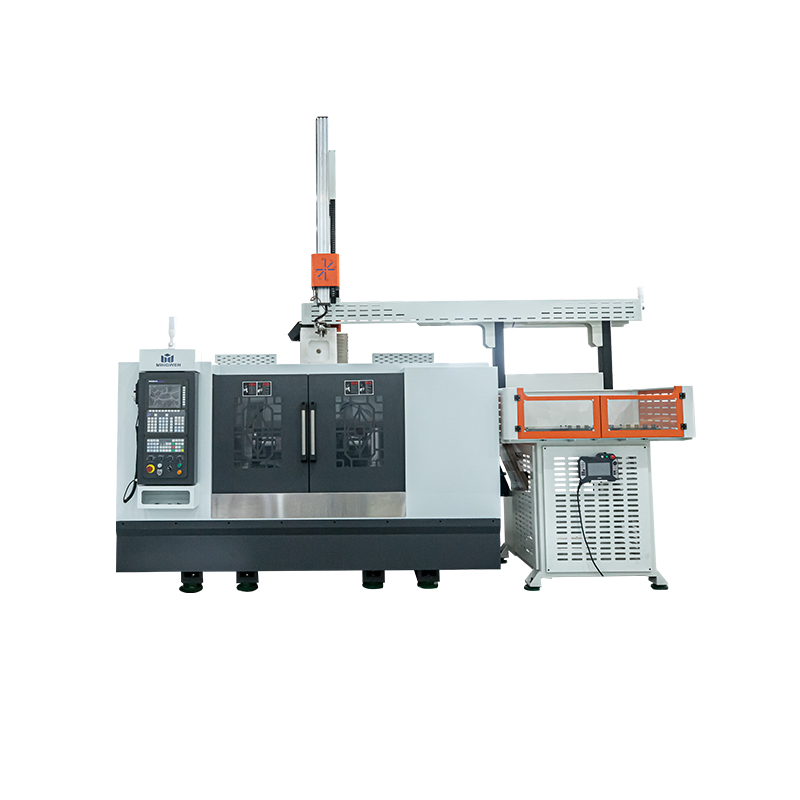
In traditional setups, a part may need to move through various machines or undergo multiple setups to complete all required operations. Rotary transfer machines with multiple spindles eliminate these extra steps by performing simultaneous operations at each index position.
For instance, one spindle may handle drilling while another executes tapping, and a third performs contour milling. The result is a part that exits the machine fully machined, without additional intervention. This workflow is particularly beneficial for manufacturers who must meet demanding delivery schedules without compromising quality.
Multi-spindle systems can be configured for either mirror-image machining (to produce symmetrical parts in parallel) or sequence-based machining, where each spindle tackles a different stage of the process. Both options minimize idle time and maximize machine utilization.
Another advantage lies in the ability to adapt to various materials and tolerances. Each spindle can be calibrated independently, and with programmable logic controls, operations can be adjusted to accommodate design changes or material-specific considerations.
As manufacturers look to streamline operations and reduce lead times, rotary transfer machines with multi-spindle capability offer a highly efficient approach to complex, high-volume machining.

 English
 Arabic
 French
 Spanish
 Portuguese
 Deutsch
 Turkish
 Dutch
Dutch
 Russian
 Romaian
 Portuguese (Brazil)
 Greek
Greek
Warning: Undefined array key "_is_photo" in /home/senmarri/public_html/friend24.in/content/themes/default/templates_compiled/9ea4999d05077b6b690d81624544cd64a51b1299_0.file.__feeds_post.comments.tpl.php on line 27
Warning: Attempt to read property "value" on null in /home/senmarri/public_html/friend24.in/content/themes/default/templates_compiled/9ea4999d05077b6b690d81624544cd64a51b1299_0.file.__feeds_post.comments.tpl.php on line 27
" style="background-image:url(
Warning: Undefined array key "user_picture" in /home/senmarri/public_html/friend24.in/content/themes/default/templates_compiled/19bd7b5d2fc32801d9316dbc2d8c5b25c99e72c3_0.file.__feeds_comment.form.tpl.php on line 31
);">
/home/senmarri/public_html/friend24.in/content/themes/default/templates_compiled/9ea4999d05077b6b690d81624544cd64a51b1299_0.file.__feeds_post.comments.tpl.php on line 128
Warning: Attempt to read property "value" on null in /home/senmarri/public_html/friend24.in/content/themes/default/templates_compiled/9ea4999d05077b6b690d81624544cd64a51b1299_0.file.__feeds_post.comments.tpl.php on line 128
">