
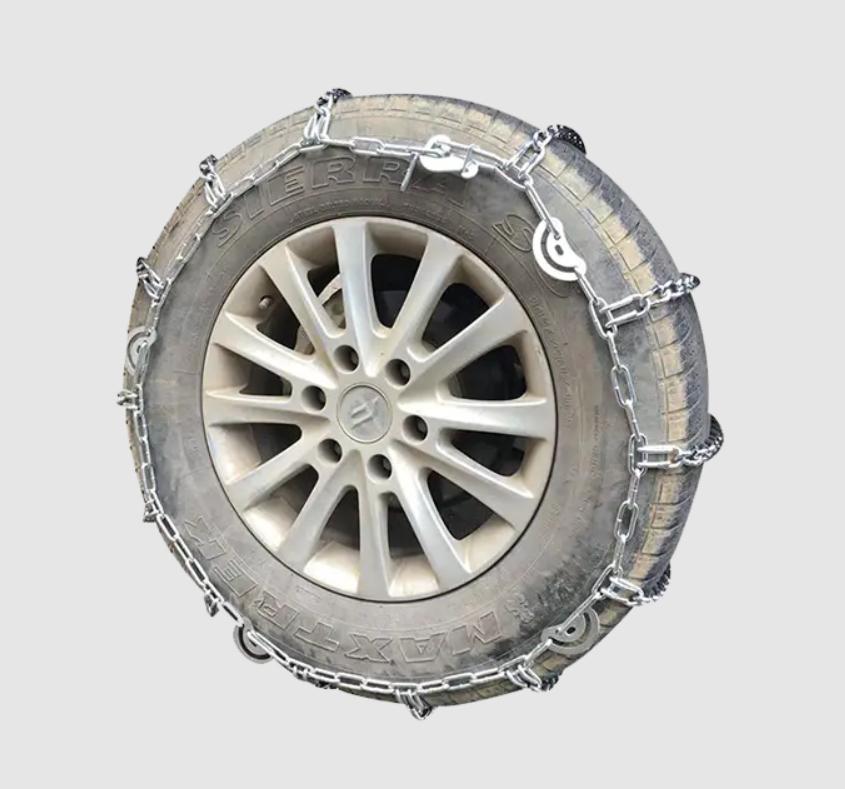
While both ATV and Tractor Snow Chains serve the purpose of increasing traction in snowy or icy conditions, the specific requirements and designs can vary depending on the vehicle type. Understanding these differences helps in choosing the right product for your needs.
ATVs, being smaller and lighter, require snow chains that do not interfere with steering or suspension. These chains are typically more compact and lightweight. Many ATV snow chains feature patterns such as diamond or ladder designs to improve grip while maintaining maneuverability.
Tractors, on the other hand, are heavier and often used in more demanding conditions. Their chains need to be more robust, often made of thicker steel with reinforced cross-links. Patterns like dual-ring or V-bar designs provide deep traction, which is useful when working on steep or muddy terrain.
Chain installation is another consideration. ATV chains can often be installed without tools and may include tensioners for a snug fit. Tractor chains, especially for larger rear tires, may require more time and effort to mount. However, once installed, they can remain in place for extended winter operations.
Tire clearance is also a factor. Ensure the chains you choose have enough room to move without interfering with vehicle parts. For both vehicle types, selecting the correct chain size is crucial for safe and effective use.
In use, ATV chains are ideal for trail riding, utility tasks, or snow-covered access roads. Tractor chains are better suited for fieldwork, plowing, or hauling heavy loads. Both types can help extend vehicle usability throughout winter, enhancing both safety and productivity.
In short, while the function is similar, ATV and tractor snow chains differ in construction, size, and application. Selecting the right type ensures better results and safer operation.

 English
 Arabic
 French
 Spanish
 Portuguese
 Deutsch
 Turkish
 Dutch
Dutch
 Italiano
 Russian
 Romaian
 Portuguese (Brazil)
Warning: Undefined array key "_is_photo" in /home/senmarri/public_html/friend24.in/content/themes/default/templates_compiled/9ea4999d05077b6b690d81624544cd64a51b1299_0.file.__feeds_post.comments.tpl.php on line 27
Warning: Attempt to read property "value" on null in /home/senmarri/public_html/friend24.in/content/themes/default/templates_compiled/9ea4999d05077b6b690d81624544cd64a51b1299_0.file.__feeds_post.comments.tpl.php on line 27
" style="background-image:url(
Warning: Undefined array key "user_picture" in /home/senmarri/public_html/friend24.in/content/themes/default/templates_compiled/19bd7b5d2fc32801d9316dbc2d8c5b25c99e72c3_0.file.__feeds_comment.form.tpl.php on line 31
);">
/home/senmarri/public_html/friend24.in/content/themes/default/templates_compiled/9ea4999d05077b6b690d81624544cd64a51b1299_0.file.__feeds_post.comments.tpl.php on line 128
Warning: Attempt to read property "value" on null in /home/senmarri/public_html/friend24.in/content/themes/default/templates_compiled/9ea4999d05077b6b690d81624544cd64a51b1299_0.file.__feeds_post.comments.tpl.php on line 128
">