
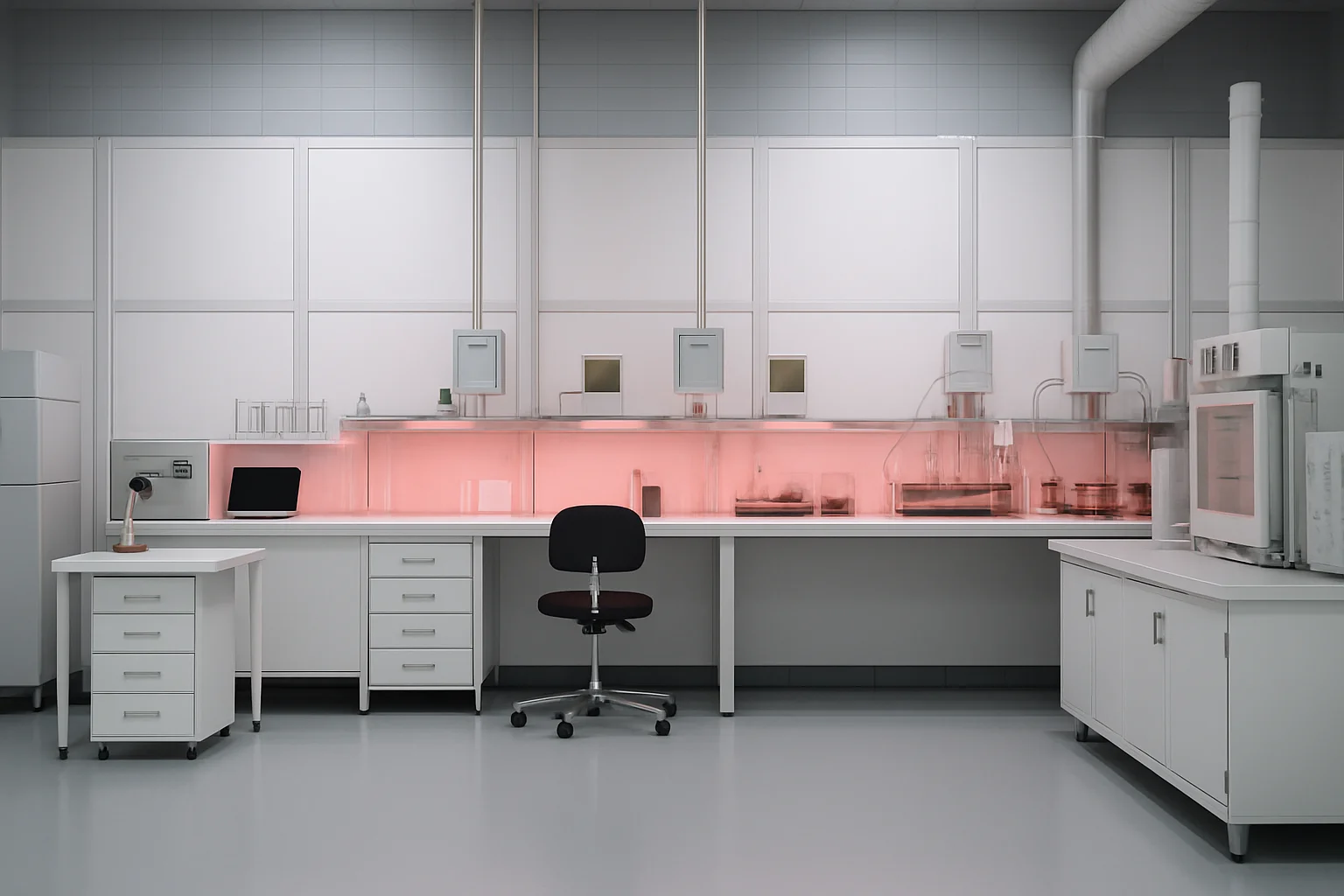
Choosing the right laboratory furniture is a critical decision that impacts workflow efficiency, safety, scalability, and long-term costs. One of the most common questions lab planners face is whether to choose fixed lab furniture or Modern Lab Furniture.
Both options have their advantages, and the right choice depends on your lab’s purpose, budget, and future plans. This blog breaks down the key differences to help you make an informed decision.
What Is Fixed Lab Furniture?
Fixed lab furniture is permanently installed and integrated into the laboratory structure. It is typically custom-built and anchored to floors or walls.
Advantages of Fixed Lab Furniture
-
High stability for heavy equipment
-
Custom-built for specific workflows
-
Clean, seamless appearance
-
Ideal for repetitive, long-term processes
Limitations of Fixed Lab Furniture
-
Limited flexibility
-
Costly and time-consuming modifications
-
Difficult to reconfigure or relocate
-
Higher renovation costs during upgrades
What Is Modular Lab Furniture?
Modular lab furniture consists of freestanding, interchangeable units that can be easily rearranged or expanded as lab needs change.
Advantages of Modular Lab Furniture
-
High flexibility and adaptability
-
Easy reconfiguration for new workflows
-
Lower long-term costs
-
Faster installation and minimal downtime
-
Scalable for future expansion
Limitations of Modular Lab Furniture
-
Slightly higher initial investment in some cases
-
May require careful planning for heavy equipment
Key Differences at a Glance
| Feature | Fixed Furniture | Modular Furniture |
|---|---|---|
| Flexibility | Low | High |
| Installation | Permanent | Quick & adaptable |
| Future Expansion | Difficult | Easy |
| Cost Over Time | Higher | More cost-effective |
| Best For | Stable, single-purpose labs | Evolving, multi-purpose labs |
Which Option Is Right for Your Lab?
Choose Fixed Lab Furniture If:
-
Your processes are stable and unlikely to change
-
You require maximum stability for heavy equipment
-
The lab layout is permanent
-
Custom-built integration is a priority
Best suited for:
Chemical labs, pharmaceutical manufacturing, dedicated testing facilities
Choose Modular Lab Furniture If:
-
Your lab functions evolve frequently
-
You plan to expand or upgrade equipment
-
You want long-term cost savings
-
Flexibility and scalability are priorities
Best suited for:
R&D labs, educational labs, industrial testing labs, multi-purpose laboratories
Safety and Compliance Considerations
Both fixed and modular furniture can meet safety and regulatory standards when designed correctly. The key is:
-
Proper spacing between workstations
-
Correct utility integration
-
Compliance with safety norms and standards
Professional lab planning ensures safety regardless of furniture type.
Conclusion
There is no one-size-fits-all solution when choosing between fixed and modular lab furniture. Fixed furniture offers stability and permanence, while modular furniture provides flexibility, scalability, and long-term value.
Modern laboratories increasingly prefer modular systems for their adaptability and future-ready design. However, the best choice depends on your lab’s specific requirements, workflow, and growth plans.
Choosing wisely today ensures your lab remains efficient, compliant, and productive tomorrow.

 English
 Arabic
 French
 Spanish
 Portuguese
 Deutsch
 Turkish
 Dutch
Dutch
 Italiano
 Romaian
 Portuguese (Brazil)
 Greek
Greek
Warning: Undefined array key "_is_photo" in /home/senmarri/public_html/friend24.in/content/themes/default/templates_compiled/9ea4999d05077b6b690d81624544cd64a51b1299_0.file.__feeds_post.comments.tpl.php on line 27
Warning: Attempt to read property "value" on null in /home/senmarri/public_html/friend24.in/content/themes/default/templates_compiled/9ea4999d05077b6b690d81624544cd64a51b1299_0.file.__feeds_post.comments.tpl.php on line 27
" style="background-image:url(
Warning: Undefined array key "user_picture" in /home/senmarri/public_html/friend24.in/content/themes/default/templates_compiled/19bd7b5d2fc32801d9316dbc2d8c5b25c99e72c3_0.file.__feeds_comment.form.tpl.php on line 31
);">
/home/senmarri/public_html/friend24.in/content/themes/default/templates_compiled/9ea4999d05077b6b690d81624544cd64a51b1299_0.file.__feeds_post.comments.tpl.php on line 128
Warning: Attempt to read property "value" on null in /home/senmarri/public_html/friend24.in/content/themes/default/templates_compiled/9ea4999d05077b6b690d81624544cd64a51b1299_0.file.__feeds_post.comments.tpl.php on line 128
">