
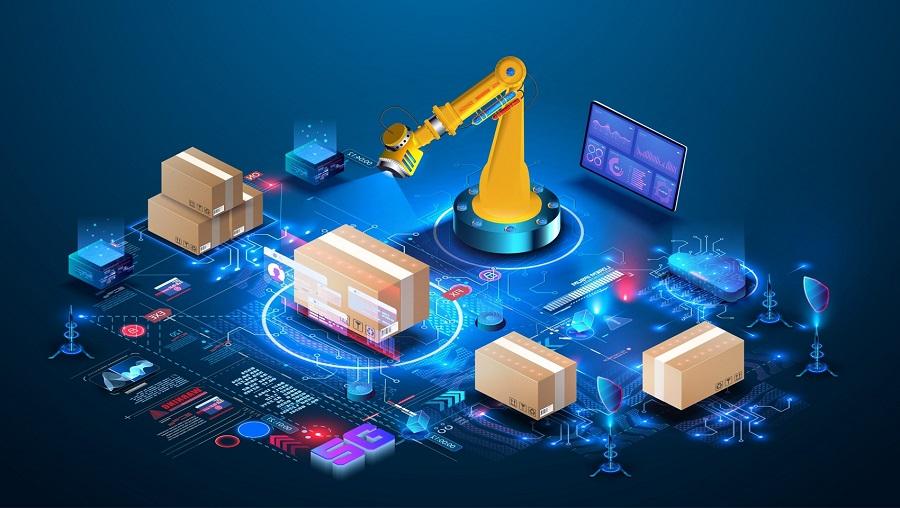
Modern Artificial Intelligence in Supply Chain helps organizations manage demand volatility, supplier risk, and complex logistics networks with better prediction and faster decision-making. Supply chains generate large datasets—sales history, promotions, weather, lead times, inventory levels, production capacity, and transportation signals. AI models can combine these inputs to forecast demand more accurately, optimize replenishment, and reduce stockouts and overstocks. In manufacturing, AI can improve production scheduling by balancing constraints and predicting bottlenecks. In logistics, AI can optimize routing, carrier selection, and delivery ETAs. AI also supports anomaly detection, flagging unusual demand spikes, shipment delays, or supplier performance issues. These capabilities improve resilience in an environment where disruptions are frequent. However, supply chain AI success depends on data quality, system integration, and clear operational workflows. AI outputs must be actionable, explainable, and aligned with business rules. When implemented well, AI becomes a decision support layer that improves service levels while controlling cost.
Common AI supply chain use cases include demand forecasting, inventory optimization, and transportation management. Forecasting models move beyond simple time series by incorporating causal factors like price changes, holidays, marketing campaigns, and macro signals. Inventory optimization uses predictions to set safety stock and reorder points by location, balancing service levels and holding costs. In warehousing, AI can improve slotting, pick path optimization, and labor planning. For transportation, models predict arrival times, recommend consolidation, and detect risk of late delivery. AI can also support procurement by predicting supplier risk and identifying alternate sources. Another growing use case is control towers, where AI synthesizes signals into risk alerts and recommended actions. Generative AI can assist with exception handling by summarizing disruptions and suggesting resolution steps. Yet the most valuable AI systems operate with humans in the loop. Planners validate recommendations, override when needed, and provide feedback that improves models over time. Integration with ERP, WMS, TMS, and supplier systems is essential so AI decisions translate into orders, shipments, and schedules. Without integration, AI becomes dashboards rather than operational improvement.
Data governance and trust are critical. Supply chain data is often fragmented across systems and partners, with inconsistent item master data, lead time definitions, and event timestamps. AI models can be misleading if inputs are wrong or biased by historical disruptions. Therefore, organizations need data cleansing, master data management, and consistent KPI definitions. Explainability helps planners trust forecasts and recommendations, especially when AI suggests reducing inventory or shifting suppliers. Security and privacy matter as well, particularly when sharing data across partners. Models must also be monitored for drift when demand patterns change, such as seasonal shifts or new product launches. Operationally, organizations need clear exception workflows: who responds to risk alerts, what actions are allowed, and how performance is measured. Successful AI supply chain programs start with high-impact areas, prove ROI, and scale through standardized data pipelines and governance. They also invest in training so teams understand how to interpret outputs and how to improve model performance through feedback.
Looking ahead, AI will increasingly support end-to-end supply chain orchestration. Multi-echelon inventory optimization, real-time ETA prediction, and dynamic re-planning will become more common. AI will integrate more tightly with automation in warehouses and factories, coordinating robots, labor, and equipment. Digital twins may enable scenario simulation, helping teams test responses to disruptions before acting. Sustainability goals will also shape AI use, optimizing routes and inventory to reduce emissions and waste. However, the future will still require human accountability. AI can recommend actions, but supply chain trade-offs involve service, cost, risk, and customer commitments that require judgment. The most successful organizations will treat AI as a capability: data governance, model monitoring, and process integration. When those foundations exist, AI in supply chain delivers measurable improvements in service levels, resilience, and efficiency.
Other Exclusive Reports:
Sports Officiating Technology Market

 English
 Arabic
 French
 Spanish
 Portuguese
 Deutsch
 Turkish
 Dutch
Dutch
 Italiano
 Russian
 Romaian
 Greek
Greek
Warning: Undefined array key "_is_photo" in /home/senmarri/public_html/friend24.in/content/themes/default/templates_compiled/9ea4999d05077b6b690d81624544cd64a51b1299_0.file.__feeds_post.comments.tpl.php on line 27
Warning: Attempt to read property "value" on null in /home/senmarri/public_html/friend24.in/content/themes/default/templates_compiled/9ea4999d05077b6b690d81624544cd64a51b1299_0.file.__feeds_post.comments.tpl.php on line 27
" style="background-image:url(
Warning: Undefined array key "user_picture" in /home/senmarri/public_html/friend24.in/content/themes/default/templates_compiled/19bd7b5d2fc32801d9316dbc2d8c5b25c99e72c3_0.file.__feeds_comment.form.tpl.php on line 31
);">
/home/senmarri/public_html/friend24.in/content/themes/default/templates_compiled/9ea4999d05077b6b690d81624544cd64a51b1299_0.file.__feeds_post.comments.tpl.php on line 128
Warning: Attempt to read property "value" on null in /home/senmarri/public_html/friend24.in/content/themes/default/templates_compiled/9ea4999d05077b6b690d81624544cd64a51b1299_0.file.__feeds_post.comments.tpl.php on line 128
">