
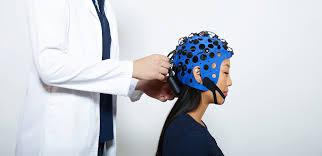
Electroencephalography has been a cornerstone of neurological diagnostics for decades. EEG recordings provide direct insight into brain activity, yet interpreting those signals has always been complex, time-consuming, and highly dependent on clinician expertise. As neurological data volumes increase, traditional analysis methods struggle to keep pace with clinical demand.
AI eeg analysis is changing that dynamic. By applying machine learning techniques to EEG data, clinicians can detect patterns faster, improve diagnostic consistency, and uncover insights that were previously difficult to observe. This transformation is not about replacing neurologists, but about augmenting clinical judgment with scalable, data-driven support that improves accuracy and efficiency.
The Rise of AI in Neurological Care
Neurology has entered a data-intensive era. Modern EEG systems generate vast datasets across multiple channels and long monitoring periods. Reviewing this information manually places heavy cognitive and time burdens on clinicians, particularly in high-volume settings such as epilepsy monitoring units.
AI eeg analysis emerged as a response to this challenge. Machine learning models can process EEG signals continuously, highlighting abnormal patterns and prioritizing segments that require expert review. This approach allows neurologists to focus on interpretation rather than exhaustive screening.
The adoption of AI in neurological care also reflects broader healthcare trends. Hospitals increasingly rely on digital tools to improve outcomes while managing resource constraints. EEG software enhanced with artificial intelligence aligns with this goal by increasing diagnostic throughput without sacrificing quality.
How EEG Data Supports Machine Learning
EEG data is uniquely suited for machine learning applications. It is structured, time-series based, and rich in frequency information. These characteristics allow algorithms to identify subtle changes in signal patterns that may escape visual inspection.
Raw EEG signals are typically preprocessed to remove artifacts such as eye movement, muscle activity, and electrical interference. Cleaned data is then transformed into features that machine learning models can analyze effectively. AI eeg analysis relies on this preprocessing stage to ensure reliable performance.
Once features are extracted, models learn to associate specific signal characteristics with clinical conditions. Over time, performance improves as systems are exposed to larger and more diverse datasets through iterative training.
Common AI Models Used in EEG Classification
Different machine learning approaches support different diagnostic goals. The choice of model depends on data volume, clinical application, and interpretability requirements.
-
Convolutional neural networks for pattern recognition
Convolutional neural networks excel at identifying spatial and temporal patterns in EEG signals. They automatically learn relevant features without manual engineering. This capability makes them particularly useful in AI eeg analysis for classification tasks involving complex signal relationships. -
Recurrent neural networks for temporal analysis
EEG data unfolds over time. Recurrent neural networks capture sequential dependencies within signals, improving detection of evolving neurological events. These models are commonly applied in machine learning seizure detection systems. -
Support vector machines for smaller datasets
In settings with limited data, traditional machine learning models remain valuable. Support vector machines offer strong performance with smaller training sets. They are often integrated into EEG software where computational simplicity is preferred. -
Ensemble models for improved robustness
Combining multiple models reduces error rates and increases generalizability. Ensemble approaches leverage strengths of different algorithms. This strategy enhances reliability across diverse patient populations.
Training Datasets, Bias Reduction, and Accuracy Improvement
High-quality training data is the foundation of effective AI eeg analysis. Models trained on narrow or homogeneous datasets may perform well in controlled environments but fail in real-world clinical settings.
Bias reduction begins with dataset diversity. EEG recordings should represent different age groups, neurological conditions, and recording environments. This diversity ensures models generalize across patient populations.
Data annotation also plays a critical role. Accurate labeling by experienced clinicians improves learning outcomes. Continuous feedback loops allow models to refine predictions over time, increasing diagnostic confidence.
-
Cross-institutional data sharing
Collaborative datasets reduce institutional bias. When EEG software developers incorporate data from multiple hospitals, models learn broader signal variations. This approach strengthens accuracy across healthcare systems. -
Ongoing performance validation
AI systems require continuous evaluation. Periodic retraining ensures models adapt to evolving clinical practices. Regular validation protects against performance drift. -
Human-in-the-loop learning
Clinician oversight remains essential. Expert review of AI outputs corrects errors and guides improvement. This collaboration improves trust and performance simultaneously.
AI-Driven Seizure Prediction vs Detection
Seizure detection and seizure prediction represent two distinct clinical goals. Detection focuses on identifying seizures as they occur or shortly afterward. Prediction aims to anticipate seizures before onset.
Machine learning seizure detection has advanced rapidly. Algorithms analyze EEG signals in real time, flagging seizure activity with high sensitivity. This capability supports continuous monitoring and faster clinical response.
Seizure prediction remains more challenging. Predictive models attempt to identify preictal patterns that precede seizures. While promising results exist, variability between patients limits universal accuracy.
-
Detection improving monitoring efficiency
Automated detection reduces clinician workload. Systems highlight relevant EEG segments instead of requiring full manual review. This efficiency improves care delivery in epilepsy units. -
Prediction offering future potential
Early warning systems could transform patient management. Predictive AI eeg analysis may support personalized treatment planning. Ongoing research continues to refine these models. -
Personalized modeling approaches
Individualized models show greater promise than generalized ones. Patient-specific training improves sensitivity. This trend aligns with precision medicine initiatives.
Regulatory and Ethical Considerations
Regulatory frameworks guide the deployment of AI in clinical environments. EEG software incorporating machine learning must comply with medical device regulations and data protection standards.
Transparency is a key concern. Clinicians need to understand how AI systems reach conclusions. Black-box models risk undermining trust if outputs cannot be explained.
Ethical considerations also include data privacy and informed consent. EEG datasets contain sensitive neurological information. Secure handling and anonymization protect patient rights.
-
Regulatory approval processes
Approval requires evidence of safety and effectiveness. Validation studies demonstrate clinical benefit. Compliance ensures responsible deployment. -
Accountability in clinical decision-making
AI supports decisions but does not replace clinicians. Responsibility remains with healthcare professionals. Clear guidelines reinforce appropriate usage. -
Patient trust and communication
Patients deserve transparency about AI involvement. Clear communication builds confidence in technology-assisted care. Ethical implementation prioritizes patient understanding.
Integration of AI Into Clinical EEG Software
AI tools must integrate seamlessly into existing workflows. Standalone systems create friction and reduce adoption. Embedded AI eeg analysis within EEG software improves usability.
User interface design matters. Clinicians should receive actionable insights without information overload. Visual markers, confidence scores, and contextual explanations support efficient interpretation.
Interoperability also influences success. Systems must integrate with hospital information systems and electronic health records. Smooth data flow enhances clinical efficiency.
The Future: Explainable AI in Diagnostic Workflows
Explainable AI represents the next phase of neurodiagnostic innovation. Clinicians need not only predictions but also reasoning behind them. Explainability bridges the gap between automation and trust.
Emerging techniques highlight EEG features contributing to model decisions. This transparency allows neurologists to validate outputs against clinical knowledge. AI eeg analysis becomes a collaborative tool rather than an opaque system.
Explainable models also support education. Trainees learn how EEG patterns correlate with diagnoses through AI-assisted visualization. This dual role strengthens both care and training.
-
Improved clinical acceptance
Transparency increases adoption. Clinicians trust systems they understand. Explainable AI addresses skepticism directly. -
Regulatory alignment
Regulators favor interpretable systems. Explainability supports compliance. Clear reasoning facilitates approval processes. -
Long-term sustainability
Systems that clinicians trust endure longer. Explainable EEG software aligns technology with human expertise. This synergy defines the future of neurodiagnostics.
Conclusion
AI is reshaping how EEG data is analyzed, interpreted, and applied in neurological care. AI eeg analysis enhances efficiency, consistency, and diagnostic insight without replacing clinical judgment. Machine learning seizure detection improves monitoring while predictive models open new research horizons.
As EEG software evolves, integration, transparency, and ethical deployment remain essential. The future lies in explainable, collaborative systems that support clinicians and benefit patients. With thoughtful implementation, artificial intelligence will continue to advance neurodiagnostics responsibly and effectively.

 English
 Arabic
 French
 Spanish
 Portuguese
 Deutsch
 Turkish
 Dutch
Dutch
 Italiano
 Romaian
 Portuguese (Brazil)
 Greek
Greek
Warning: Undefined array key "_is_photo" in /home/senmarri/public_html/friend24.in/content/themes/default/templates_compiled/9ea4999d05077b6b690d81624544cd64a51b1299_0.file.__feeds_post.comments.tpl.php on line 27
Warning: Attempt to read property "value" on null in /home/senmarri/public_html/friend24.in/content/themes/default/templates_compiled/9ea4999d05077b6b690d81624544cd64a51b1299_0.file.__feeds_post.comments.tpl.php on line 27
" style="background-image:url(
Warning: Undefined array key "user_picture" in /home/senmarri/public_html/friend24.in/content/themes/default/templates_compiled/19bd7b5d2fc32801d9316dbc2d8c5b25c99e72c3_0.file.__feeds_comment.form.tpl.php on line 31
);">
/home/senmarri/public_html/friend24.in/content/themes/default/templates_compiled/9ea4999d05077b6b690d81624544cd64a51b1299_0.file.__feeds_post.comments.tpl.php on line 128
Warning: Attempt to read property "value" on null in /home/senmarri/public_html/friend24.in/content/themes/default/templates_compiled/9ea4999d05077b6b690d81624544cd64a51b1299_0.file.__feeds_post.comments.tpl.php on line 128
">