
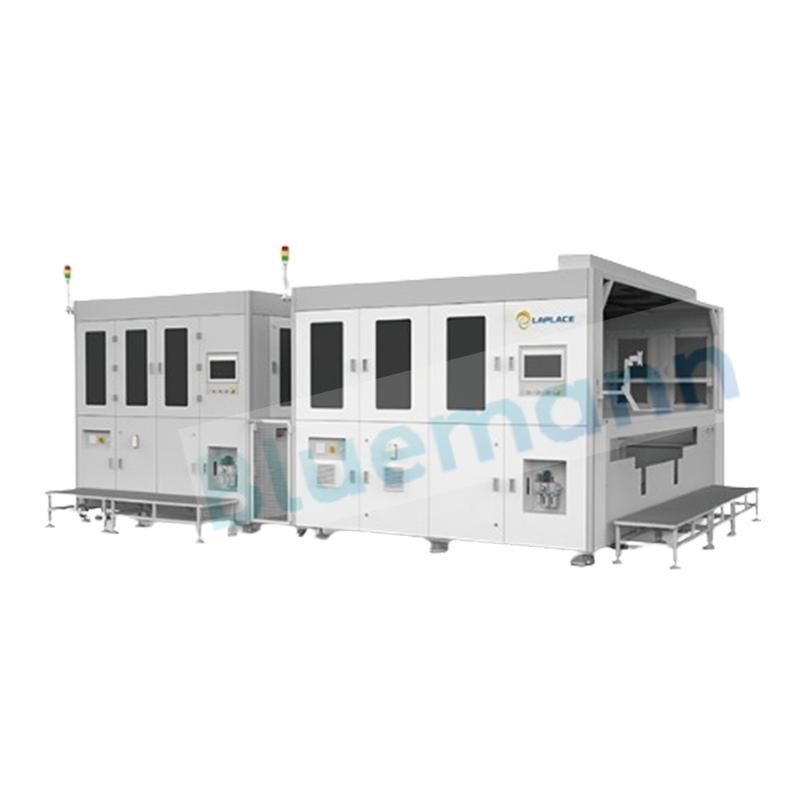
In today’s fast-paced electronics, automotive, optics, and smart device manufacturing sectors, surface protection and precision lamination have evolved from simple accessory steps into mission-critical production processes. As product designs become thinner, more complex, and more functional, the need for highly controlled film application grows dramatically. This is where the Gap Film Laminating Machine stands out as a pivotal innovation—bridging precision, adaptability, and automation in one integrated system.
Bluemann, a leading manufacturer in intelligent lamination and automation equipment, has spent years advancing the technology that underpins gap film application. Their solutions are now widely adopted in consumer electronics, precision instruments, touch panels, optical components, and high-end manufacturing environments where millimeter-level accuracy is not enough—micron-level precision is the new baseline.
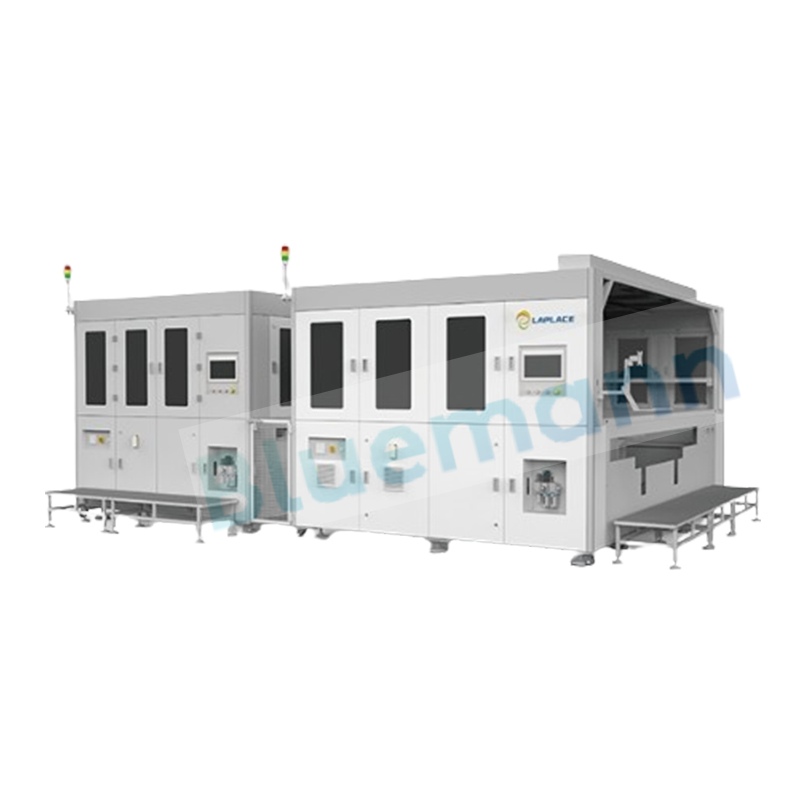
1. Understanding What a Gap Film Laminating Machine Really Does
A Gap Film Laminating Machine is a high-precision automation system designed to apply films, protective foils, adhesive layers, or optical materials onto workpieces with gaps, irregular surfaces, or strict positioning requirements.
Traditional laminating systems rely heavily on uniform surfaces and standard shapes. However, modern devices—such as smartphones, cameras, medical sensors, and automotive displays—feature curvature, edges, recesses, and multi-material transitions that complicate lamination.
This advanced equipment addresses those challenges by enabling:
Precise film coverage even across structural gaps
Compensation for uneven or curved surfaces
Accurate alignment using machine vision
Clean-room-level application without bubbles or wrinkles
High repeatability suitable for mass production
As products become more compact and engineered for both aesthetics and functionality, such equipment has become essential to production lines worldwide.
2. Why Gap-Sensitive Applications Require a Dedicated Lamination Solution
Gap film lamination is not merely about sticking a film onto a surface. It involves deeper engineering problems:
(1) Gaps cause inconsistent adhesion
Materials of different heights or textures create uneven contact, leading to:
Air pockets
Insufficient adhesive compression
Film distortion
(2) Irregular surfaces challenge pressure uniformity
Conventional rollers cannot apply uniform force on recessed or edge-contour zones.
(3) Misalignment risks increase as workpieces shrink
A 0.1 mm offset is noticeable on small electronic components. High-end products cannot tolerate misalignment.
(4) Manual processes introduce contamination
Fingerprints, dust, or improper handling cause optical defects—especially harmful for lens, screen, and sensor products.
The Gap Film Laminating Machine from Bluemann is engineered precisely to resolve these issues, supporting stable performance in demanding industrial scenarios.
3. Technological Features That Define Bluemann’s Gap Film Laminating Machine
• High-Precision Vision Alignment System
A dual-camera or multi-camera vision platform ensures precise alignment before lamination. The system:
Identifies reference points
Calculates X/Y/θ deviations
Auto-corrects positioning in milliseconds
This eliminates human variability and ensures every cycle meets strict tolerances.
• Adaptive Pressure Control
Unlike traditional lamination rollers, Bluemann employs intelligent pressure-modulating mechanisms that adjust force according to:
Surface height variations
Layer material characteristics
Specific lamination patterns
This ensures consistent film compression without damaging delicate components.
• Micro-Gap Compensation Technology
The heart of any gap film system, Bluemann’s algorithm-based compensation enables:
Uniform contact across uneven surfaces
Perfect fitting in recessed workpieces
Bubble-free adhesive flow
This is critical for small displays, camera modules, and sensor interfaces.
• Anti-Static and Clean-Handling Design
Static electricity and dust contamination are common enemies of lamination. Bluemann’s design integrates:
Ionizing bars
Dust-resistant tooling
Clean-room compatible materials
The results: higher yields and fewer surface defects.
• Flexible Material Compatibility
The machine supports a wide range of films, including:
Protective PET films
Optical OCA films
Tempered glass films
TPU coverings
Functional adhesive layers
This versatility makes it ideal for manufacturers handling diverse product lines.
4. Industrial Applications: Where Gap Film Laminating Machines Deliver Maximum Value
The technology shines across multiple high-tech industries:
• Consumer Electronics
Phones, tablets, wearables, camera modules, housing panels.
• Automotive Displays & Interior Components
Curved screens, decorative trims, sensor covers.
• Medical Devices
Diagnostic sensors, instrument panels, monitoring equipment.
• Optical Components
Lens covers, viewfinders, AR/VR components.
• Smart Home Devices
Panels, indicator surfaces, structural components.
For manufacturers prioritizing precision, cleanliness, and consistency, adopting Bluemann’s machine becomes a direct path to improved yield and throughput.
5. Why Leading Manufacturers Choose Bluemann
With decades of combined engineering experience, Bluemann delivers more than machinery—they deliver a complete solution. Their advantages include:
Customized lamination strategies for unique product shapes
Stable and scalable system architecture
Data-driven process monitoring
Full technical support from integration to maintenance
Proven performance in global electronics supply chains
For enterprises seeking high-efficiency automation, Bluemann stands out as a trusted technology partner capable of elevating production performance.
Conclusion
As product designs continue evolving toward thinner, more complex, and higher precision structures, conventional lamination techniques are simply no longer adequate. The Gap Film Laminating Machine represents the next step in automated film application—combining intelligence, micro-precision, adaptability, and stability.
With advanced solutions engineered by Bluemann, manufacturers can confidently navigate challenging surface geometries, enhance product consistency, and significantly optimize production efficiency. In a competitive global market, investing in precision film lamination is not optional—it is essential for achieving premium quality and long-term business success.

 Arabic
 French
 Spanish
 Portuguese
 Deutsch
 Turkish
 Dutch
Dutch
 Italiano
 Russian
 Romaian
 Portuguese (Brazil)
 Greek
Greek
Warning: Undefined array key "_is_photo" in /home/senmarri/public_html/friend24.in/content/themes/default/templates_compiled/9ea4999d05077b6b690d81624544cd64a51b1299_0.file.__feeds_post.comments.tpl.php on line 27
Warning: Attempt to read property "value" on null in /home/senmarri/public_html/friend24.in/content/themes/default/templates_compiled/9ea4999d05077b6b690d81624544cd64a51b1299_0.file.__feeds_post.comments.tpl.php on line 27
" style="background-image:url(
Warning: Undefined array key "user_picture" in /home/senmarri/public_html/friend24.in/content/themes/default/templates_compiled/19bd7b5d2fc32801d9316dbc2d8c5b25c99e72c3_0.file.__feeds_comment.form.tpl.php on line 31
);">
/home/senmarri/public_html/friend24.in/content/themes/default/templates_compiled/9ea4999d05077b6b690d81624544cd64a51b1299_0.file.__feeds_post.comments.tpl.php on line 128
Warning: Attempt to read property "value" on null in /home/senmarri/public_html/friend24.in/content/themes/default/templates_compiled/9ea4999d05077b6b690d81624544cd64a51b1299_0.file.__feeds_post.comments.tpl.php on line 128
">